> For the complete documentation index, see [llms.txt](https://kdoore.gitbook.io/vital-intelligence/llms.txt). Markdown versions of documentation pages are available by appending `.md` to page URLs; this page is available as [Markdown](https://kdoore.gitbook.io/vital-intelligence/models/regenerative-geometry-of-vital-intelligence.md).
# Regenerative Geometry of Vital Intelligence
Enso · Ouroboros · Torus · Holarchy · Prosocial Evolution
### 1. Why Geometry and Symbol Belong in VIM
The Vital Intelligence Model (VIM) treats intelligence as **recursive**: systems that sense themselves, model themselves, and update themselves in response to experience. Across cultures and sciences, this recursion keeps appearing in **geometric** and **mythic** forms:
* The **ensō** – a circle painted in one breath within Zen traditions, sometimes open, sometimes closed, associated with emptiness, wholeness, and wabi-sabi imperfection ( [Wikipedia](https://en.wikipedia.org/wiki/Ens%C5%8D)).
* The **ouroboros** – the serpent that circles back to its own tail, a symbol in alchemy and Jungian psychology of self-devouring, self-renewal, and shadow integration ([Wikipedia](https://en.wikipedia.org/wiki/Ouroboros), Jung, *Mysterium Coniunctionis*).
* The **torus** – a donut-shaped field where energy and information flow in, circulate, and flow out again, used in Dirk Meijer’s nested toroidal models of brain–field consciousness (Meijer & Geesink, 2017).
* The **holarchy** – nested wholes (cells → organs → persons → groups → institutions → biosphere) connected by multi-level feedback, central to D.S. Wilson’s multilevel selection theory and Elinor Ostrom’s work on commons governance (Wilson et al., 2020; Ostrom, 1990).
In VIM, these are not religious claims; they are **symbolic lenses on real dynamics** in nervous systems, groups, and AI-mediated infrastructures.
***
### 2. Enso & Ouroboros – Recursive Shadow Integration
#### Enso: Open Wholeness and the White Gap
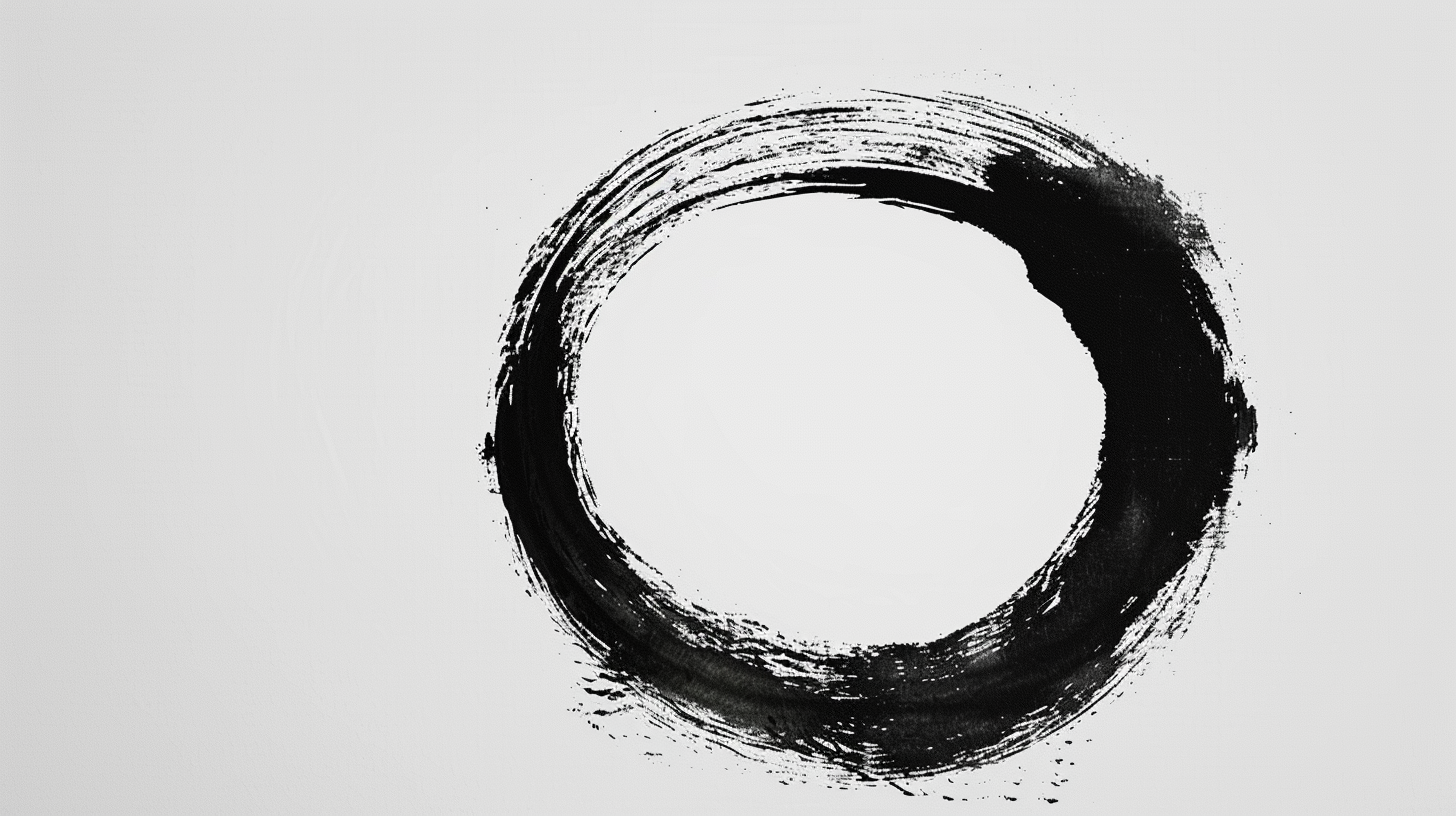
The **ensō** is a single, continuous brushstroke that forms a circle. Sources note that it can be **open or closed**, with the open form emphasizing motion, incompleteness, and the beauty of imperfection.
VIM focuses on the **open ensō** because it visually encodes:
* **Wholeness, not perfection** – The circle holds stress, regulation, reconnection, and response in one gesture.
* **Impermanence and flow** – The stroke is drawn once; there are no edits. It mirrors the nervous system as an ever-changing process rather than a static object.
* **The white gap as recursive pause** – The deliberate opening at the top represents the **moment of awareness**:
* The system recognizes itself: “This is a pattern.”
* It can choose not to repeat the same conditioned response.
* New possibilities emerge before the next loop begins.
In VIM, this gap is the space between **Respond** and the next **Recognize** in the Regenerative Cycle—the contemplative pause where experience is digested into new capacity.
#### Ouroboros: Shadow Integration and Feedback
The **ouroboros**—a serpent encircling and biting its own tail—appears in alchemical texts as a symbol of self-referential transformation. Jung describes it as a dramatic image of the psyche “devouring itself” and turning itself into a circulatory process, integrating opposites and shadow material into a new wholeness (Jung, *Mysterium Coniunctionis*).
Key qualities:
* **Self-reference and feedback** – The serpent closes a loop with itself: old forms become food for new forms.
* **Integration of opposites** – Light and shadow, conscious and unconscious, creation and destruction coexist in one continuous body.
* **Death–rebirth of patterns** – The ouroboros “kills and renews” itself at the level of form: old ego configurations, built around prior experiences and survival needs, are dissolved and re-organized into more integrated, less defensive patterns of self.
In VIM terms, the ouroboros symbolizes **feedback loops that include shadow**: cycles in which trauma, conflict, and depletion are not expelled or denied, **but metabolized into wisdom and new structure**.
#### Regenerative Cycle as Living Enso/Ouroboros
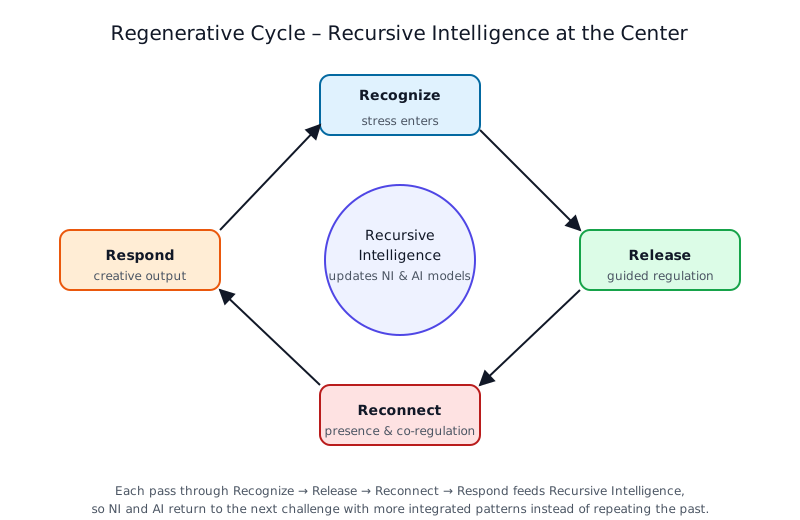
Read through this lens, the Regenerative Cycle—**Recognize → Release → Reconnect → Respond**—becomes a living ouroboros drawn as an open ensō:
* **Recognize** – Stress enters the system and the pattern is named.
* **Release** – Guided regulation cools physiological and emotional energy so it can be felt and processed.
* **Reconnect** – Presence and co-regulation restore coherence across the system (self, others, environment).
* **Respond** – Creative output and structural adjustments embody what has been learned.
The **stroke** of the ensō is this full loop of experience. The **gap** at the top is the **choice point**: repeating the past or returning with deeper intelligence. Recursive intelligence lives at this opening.
***
### 3. Torus – Flows of Energy and Information
Dirk Meijer and colleagues describe consciousness as supported by **scale-invariant, nested toroidal couplings** of energy and information fields surrounding and interacting with the brain (Meijer & Geesink, 2017). A **torus** can be imagined as a donut-shaped field:
* Energy/information **enter** through one pole,
* **Circulate** around the surface,
* **Exit/Return** through the other pole in continuous exchange with environment.
In VIM, the Regenerative Cycle can be visualized as a **meridian on this torus**:
* The **outer path** traces the visible cycle: Recognize → Release → Reconnect → Respond.
* The **inner return** carries the informational update:
* Natural Intelligence (NI) updates its predictions about safety, belonging, and agency.
* Artificial / Agentic Intelligence (AI) is revised in light of real human and ecological impacts, constraints, and ethical commitments.
Over many loops, the system does not merely go in circles; it **spirals** around the torus, gradually reshaping the whole field of Vital Intelligence.
***
### 4. Carbon & Silicon – Two Substrates, Shared Geometry
Beneath NI and AI lie different elemental substrates:
* **Carbon-based NI**
* Carbon forms chains and rings (such as benzene), whose geometry and vibration support complex organic chemistry and, eventually, nervous systems.
* Brains and bodies are carbon-based oscillators expressing pink-noise rhythms and fractal dynamics.
* **Silicon-based AI**
* Silicon forms crystalline lattices used in semiconductor devices.
* Transistor networks and integrated circuits implement digital computation via controlled electron flows.
VIM does not collapse these differences—but it notes a deep rhyme:
> Both carbon and silicon become intelligent through **geometry and flow**: rings, lattices, fields, and feedback loops.
The Regenerative Cycle is a place where these substrates **interact**:
* Carbon-based nervous systems feel stress, regulate, co-regulate, and respond.
* Silicon-based systems can either
* **amplify dysregulation** (e.g., outrage-feeding recommendation loops), or
* **support regeneration** (e.g., tools for breathwork, NVC practice, prosocial coordination and decision support).
VIM’s trauma-informed, somatic emphasis keeps NI at the center while inviting AI into the toroidal field as a potential partner rather than a master.
***
### 5. Jung, Kekulé, and Symbolic Pathways into Science
The ouroboros has already shaped scientific understanding:
* Alchemists used it as a symbol of **self-referential transformation** of the *prima materia*.
* Jung reads it as an image of the psyche integrating shadow through feedback over time.
* German chemist August Kekulé famously reported that a dream of a snake biting its own tail catalyzed his insight into the **ring structure of benzene**—a key step in modern organic chemistry.
This lineage matters for VIM because it shows that:
* **Symbolic imagination** often precedes formal equations.
* Unconscious geometric models (circles, rings, spirals, tori) can guide the evolution of **rational world-models**.
* Today’s challenge is to let **symbol, soma, and silicon** inform each other, instead of allowing a narrow, purely rationalistic image of intelligence to dominate AI and institutional design.
The Regenerative Cycle is one such bridge: a way to translate symbolic insight and embodied felt sense into explicit models and design principles for NI–AI systems.
***
### 6. Holarchy & Multilevel Selection – From Individuals to Groups to Planet
VIM situates the Regenerative Cycle inside a **holarchic, multilevel selection** frame:
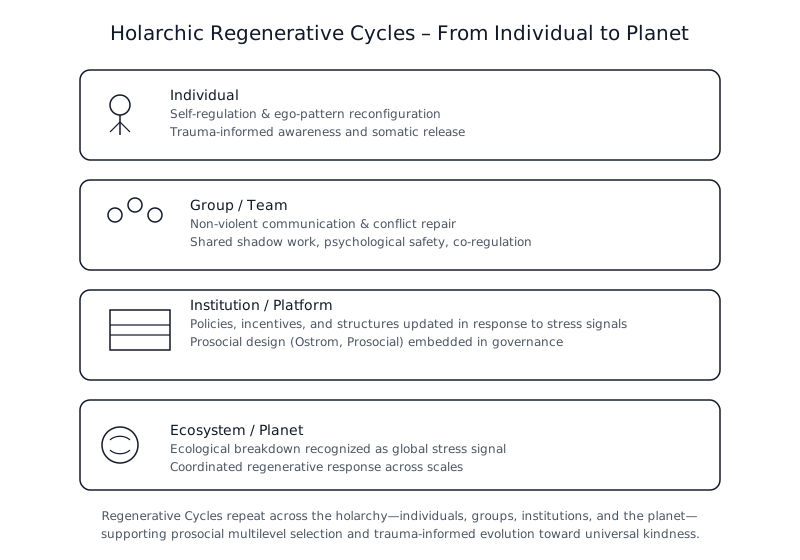
* **Holarchy:** individuals nested in groups, groups nested in institutions, institutions nested in ecosystems and the biosphere.
* **Multilevel selection**: prosocial groups that regulate self-interest and care for the common good can outcompete groups organized around pure dominance and extraction (Atkins et al, 2019; Wilson et al., 2020).
* **Ostrom’s core design principles:** robust commons-governing groups share features like clear boundaries, fair decision-making, monitoring and feedback, graduated responses to harm, conflict-resolution processes, and nested governance (Ostrom, 1990).
Within VIM, these principles are not just governance rules; they are **extensions of the Regenerative Cycle up the holarchy**:
* Individuals practice **self-regulation and shadow integration** (Recognize → Release → Reconnect → Respond).
* Groups adopt **prosocial norms, non-violent communication (NVC), and conflict repair practices** that mirror the same cycle.
* Institutions and platforms learn to **update policies and infrastructures** in response to trauma signals and ecological feedback, rather than suppressing them.
Trauma-informed shadow work becomes an **evolutionary driver**:
* Dysregulated individuals and groups tend toward zero-sum competition and authoritarian simplifications of complex realities.
* Trauma-informed groups build capacity for somatic regulation, NVC, and shared meaning-making about stress signals.
In this sense, **stress is information**:
* At the individual level, physiological stress (heart rate, breath, tension) signals predictive overload or misalignment.
* At the group level, conflict and burnout signal design flaws in incentives, narratives, and power structures.
* At the planetary level, ecological breakdown is a macro-level stress signal about our collective world-model.
The Regenerative Cycle teaches us to **treat stress as data, not as an enemy**—to integrate shadow rather than numb it.
***
### 7. Universal Kindness as the Lowest-Energy Configuration
From a thermodynamic and evolutionary perspective, VIM proposes:
> **Universal kindness is the lowest-energy configuration for Humanity.**
Not kindness as sentimentality, but as:
* **Minimal friction** in social interactions (less chronic fight/flight/freeze).
* **More efficient coordination** across scales (less wasted energy in conflict and mistrust).
* **Stable prosocial equilibria** where multilevel selection favors groups that care for their members and their environments.
In a holarchic, toroidal field of Vital Intelligence:
* Kindness and co-regulation **reduce the energy cost** of being together.
* Trust allows information to flow more freely (less defended bandwidth).
* Trauma-informed shadow work keeps the system **near criticality**—flexible, responsive, creative—rather than locked in collapse or chaos.
NI and AI together can help us **steer toward this low-energy, high-wisdom configuration**:
* NI brings embodied sensitivity, moral intuition, and relational depth.
* AI, properly constrained and guided, can help us sense patterns, simulate futures, and coordinate action **without dehumanizing the substrates** that make any of this possible.
Through this lens, the Regenerative Cycle—read through enso, ouroboros, torus, and holarchy—is VIM’s way of saying:
> We can evolve with our technologies if we honor the body, the shadow, and the circle—\
> using every loop of stress and disruption as fuel for deeper collective kindness.
***
### References
* Ensō. (n.d.). *Wikipedia*. Retrieved from
* Ouroboros. (n.d.). *Wikipedia*. Retrieved from
* Jung, C. G. (1963). *Mysterium Coniunctionis: An Inquiry into the Separation and Synthesis of Psychic Opposites in Alchemy*. Princeton University Press.
* Meijer, D. K. F., & Geesink, H. J. H. (2017). Consciousness in the Universe is Scale Invariant and Implies an Event Horizon of the Human Brain. *Neuroquantology, 15*(3), 41–79. [Link:](https://www.semanticscholar.org/paper/Consciousness-in-the-Universe-is-Scale-Invariant-an-Meijer-Geesink/1460db3f467c6b71cb418c92cd46545c799ec25f)
* Ostrom, E. (1990). *Governing the Commons: The Evolution of Institutions for Collective Action*. Cambridge University Press.
* Atkins, P. W. B., Wilson, D. S., & Hayes, S. C. (2019). *Prosocial: Using evolutionary science to build productive, equitable, and collaborative groups*. Oakland, CA: Context Press / New Harbinger Publications.
* Wilson, D. S., Philip, M. M., MacDonald, I. F., Atkins, P. W. B., & Kniffin, K. M. (2020). Core design principles for nurturing organization-level selection. *Scientific Reports, 10*(1), 13989.
* Brown, R. P., & Gerbarg, P. L. (2012). *The healing power of the breath: Simple techniques to reduce stress and anxiety, enhance concentration, and balance your emotions*. Boston, MA: Shambhala Publications.